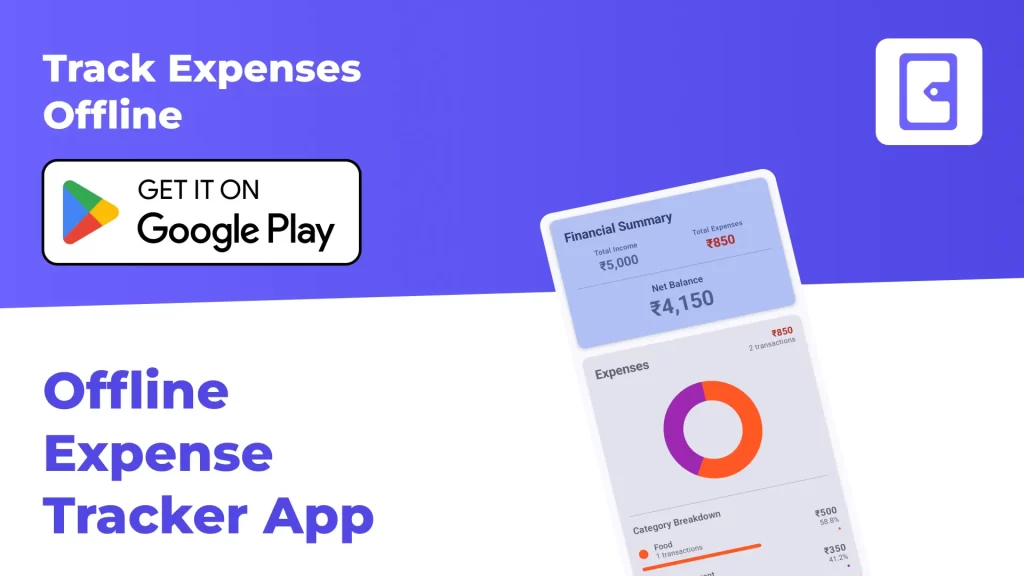
Track Your Expenses Offline: A Beginner’s Guide to Offline First Finance Apps


Table of Contents
- What Exactly is an "Offline-First" Application?
- Why Choose Offline-First for Your Finances?
- Unmatched Privacy and Security
- Guaranteed Accessibility Anywhere, Anytime
- Blazing Fast Performance
- Longevity and Reliability
- Essential Features to Look For in an Offline App
- How to Make the Transition and Best Practices
- Conclusion
We live in a hyper-connected era where it often feels like our smartphones become expensive paperweights the moment they lose their internet connection. From social media feeds to navigation maps, our daily digital lives are tethered to the cloud. Over the last decade, personal finance and expense tracking applications have followed this exact same trajectory. The standard expectation today is that you link your bank account, create a mandatory online profile, and trust a third-party server to hold, analyze, and sync your most sensitive financial data.
But what happens when you are traveling abroad without a data plan and need to log a cash expense? What happens when a server outage prevents you from checking your monthly budget while standing in the checkout line? More importantly, what happens to your deeply personal spending habits when they are stored on a corporate server vulnerable to data breaches and third-party advertising algorithms?
If these questions make you pause, you are not alone. A growing movement of privacy-conscious and utility-focused users are turning toward a different software philosophy. This is the world of the “offline-first” application.
Taking control of your money shouldn’t require surrendering your privacy or relying on a constant cellular signal. In this beginner’s guide, we will explore exactly what offline-first finance apps are, why they are an incredibly powerful tool for managing your money, and how you can seamlessly transition to tracking your expenses without an internet connection.
What Exactly is an “Offline-First” Application?
To understand the value of an offline-first expense tracker, it helps to understand how most modern applications are built.
The vast majority of popular finance apps are “cloud-first.” In a cloud-first architecture, the application on your phone is essentially just a window looking into a database that lives on a remote server. When you open the app, it sends a request over the internet to fetch your balance. When you log a coffee purchase, it sends that data through the internet to be saved on the server. If you lose your internet connection, the app either stops working entirely or offers a severely degraded, read-only experience.
An “offline-first” application flips this architecture upside down. In this model, the primary database lives directly on your device right in your smartphone’s internal storage. When you open the app, it reads the data locally. When you log an expense, it saves the data locally. The application is entirely self-contained and fully functional without ever needing to communicate with the outside world.
It is important to note that “offline-first” does not necessarily mean “offline-only.” Many modern offline-first apps offer synchronization features to keep your data updated across multiple devices. However, the sync process is treated as a secondary background task. The app prioritizes local storage first, meaning you can record dozens of transactions in an internet dead zone, and the app will quietly and securely reconcile that data with your other devices only when a connection is re-established.
Why Choose Offline-First for Your Finances?
Transitioning from a mainstream, auto-syncing financial app to an offline-first alternative might seem like a step backward in convenience. However, this architectural shift provides a multitude of benefits that cloud-first apps simply cannot offer.
Unmatched Privacy and Security
Your financial history is arguably the most sensitive data you generate. It reveals where you live, where you work, what you eat, the medical treatments you receive, and the hobbies you enjoy. When you use a traditional cloud-based expense tracker, you are entrusting this incredibly intimate data to a third party. Even if a company promises not to sell your data, their servers remain prime targets for hackers.
Offline-first apps inherently solve this problem through “data sovereignty.” Because your financial database lives exclusively on your physical device, it cannot be compromised in a massive corporate server breach. There are no user accounts to be hacked, no passwords to be intercepted in transit, and no data brokers scraping your transaction history to serve you targeted advertisements. You own your data, period.
Guaranteed Accessibility Anywhere, Anytime
Life happens regardless of your Wi-Fi status. Whether you are navigating a bustling, crowded market in a foreign country, flying at 30,000 feet, or riding a subterranean subway train, offline-first apps work flawlessly. You can immediately log cash transactions as they happen without waiting for a loading screen or paying exorbitant cellular roaming fees while traveling. This immediate logging builds better financial habits, as you don’t have to rely on your memory to input expenses hours later when you finally connect to a network.
Blazing Fast Performance
Have you ever opened an app and stared at a spinning wheel while it tries to fetch your own data? Because offline-first apps don’t have to wait for a round-trip signal to a server halfway across the country, they are incredibly fast. Opening the app is instantaneous. Searching through months of past transactions happens in the blink of an eye. This frictionless experience removes the subtle annoyances that often cause people to abandon their budgeting habits.
Longevity and Reliability
The tech industry is notoriously volatile. Startups launch, get acquired, and shut down their servers all the time. When a cloud-first app goes out of business, your app stops working, and you often lose access to years of financial history. With an offline-first app, you are immune to “server sunsetting.” Even if the developer stops updating the app or goes out of business entirely, the application will continue to work exactly as it always has, safely residing on your phone.
Essential Features to Look For in an Offline App
If you are ready to make the switch, you will find that not all offline apps are created equal. As you browse the app store for your new financial companion, look for these critical features to ensure you are getting a robust, future-proof tool:
No Mandatory Account Creation: A true offline-first app should not force you to create a username, password, or provide an email address just to access the main interface. You should be able to download the app and start logging numbers immediately.
Comprehensive Export Options: Because the data lives on your phone, you need a way to get it out. Ensure the app allows you to export your data in universal, non-proprietary formats like CSV (Comma Separated Values) or JSON. This guarantees you are never locked into a specific ecosystem and can view your data in standard spreadsheet software like Excel or LibreOffice.
Local Backup Capabilities: Relying on local storage means your data is tied to your physical device. If you drop your phone in a lake, your data goes with it. The app must have an easy way to generate encrypted backup files that you can manually save to your personal cloud storage, email to yourself, or transfer to a physical hard drive.
Category Customization: Every individual’s financial life is unique. Look for an app that allows you to create, edit, and delete expense categories rather than forcing you into a rigid, pre-defined template.
How to Make the Transition and Best Practices
Moving to an offline-first model requires a slight shift in how you think about your money, primarily because you will likely be moving away from automated bank syncing.
Embrace Manual Entry for Mindful Spending
Cloud-first apps often boast about their ability to connect directly to your bank and pull in transactions automatically. While convenient, this often leads to a passive relationship with your money. You check the app at the end of the month and wonder where your money went. Offline-first apps rely on manual entry. While logging every coffee or grocery trip manually takes a few extra seconds, it is incredibly beneficial for your financial psychology. The physical act of typing in a number forces you to confront your spending in real-time, significantly increasing your financial mindfulness and drastically reducing impulse purchases.
Establish a Bulletproof Backup Routine
The only true vulnerability of an offline-first system is hardware failure or device loss. To mitigate this, you must become your own IT department. Set a calendar reminder to export a backup of your financial data once a week or at the end of every month. Save this backup file to a secure location, such as an encrypted folder on your computer or a privacy-respecting cloud storage provider.
Secure Your Device
Because your phone is now the sole vault for your financial records, device security is paramount. Ensure your smartphone requires a strong passcode, PIN, or biometric lock (like fingerprint or facial recognition) to unlock. Additionally, look for offline apps that offer a secondary “app lock” feature, requiring authentication just to open the expense tracker, providing an extra layer of security if you hand your unlocked phone to a friend.
Conclusion
Switching to an offline-first finance app is more than just a software choice it is a commitment to digital minimalism, personal privacy, and financial mindfulness. By severing the tether to third-party servers, you reclaim ownership of your data, eliminate the frustrations of slow loading times, and ensure your budgeting tools are available exactly when and where you need them. While it requires taking a bit more responsibility for your own backups and manual data entry, the peace of mind that comes from knowing your financial life is secure, private, and entirely in your own hands is well worth the effort.