The Future of Personal Finance: Why Expense Lite Is a Must-Have Android App

Table of Contents
Managing personal finance in the modern era is paradoxically both easier and more complex than ever before. On one hand, we have unprecedented access to financial markets, digital banking, and instant transactions. On the other hand, the sheer velocity at which money moves today through automated subscriptions, tap-to-pay interfaces, and micro-transactions has made money virtually invisible. When you never actually see cash leaving your wallet, it becomes incredibly easy to overspend, lose track of your budget, and ultimately compromise your long-term financial health.
To combat this “invisible money” phenomenon, establishing a reliable system for tracking your daily expenses is no longer just a good idea; it is an absolute necessity. While the Google Play Store is flooded with budgeting tools, many are bloated with unnecessary features, intrusive advertisements, and confusing interfaces that create friction. This is where Expense Lite steps in. Designed with clarity, speed, and user experience at its core, Expense Lite is rapidly becoming the ultimate personal finance tracker for Android users.
In this comprehensive guide, we will explore the educational foundations of effective money management, the behavioral psychology behind expense tracking, and why Expense Lite is uniquely positioned to represent the future of personal finance.
The Evolution of Money Management: Why Spreadsheets No Longer Cut It
For decades, the gold standard of personal financial tracking was the trusty pen-and-paper ledger, which eventually evolved into the digital spreadsheet. While spreadsheets offer infinite customizability, they suffer from a fatal flaw in the context of daily habit-building: they require high cognitive effort and delayed data entry.
If you buy a coffee at 8:00 AM, you are unlikely to open a complex spreadsheet on your smartphone to log a $4.00 transaction. By the time you sit down at your computer days later, that transaction is forgotten. This delay creates a disconnect between the act of spending and the act of tracking. Financial literacy educators emphasize that immediate feedback is crucial for behavioral change.
The future of personal finance relies on reducing the friction between spending and logging. Mobile applications bridge this gap by living on the device you carry everywhere. However, not all apps are created equal. The industry has seen a trend toward “super-apps” that attempt to link to your bank accounts, offer credit cards, and sell you financial products. While some find this useful, it often results in a sluggish, overwhelming user experience that distracts from the fundamental goal: mindful awareness of where your money is going.
Core Philosophy: Why “Lite” is the New Powerful
In software development, there is a growing appreciation for the philosophy of minimalism. Expense Lite embodies this philosophy perfectly. By stripping away the bloatware that plagues modern financial apps, Expense Lite focuses relentlessly on the core utility of expense tracking. Here is why this “lite” approach is a massive advantage for Android users:
1. Zero Friction Logging
The most critical metric for any habit-building app is the “time-to-value” how long it takes a user to complete their desired action. Expense Lite is engineered for speed. The application opens instantly, allowing users to input an expense, categorize it, and save it in a matter of seconds. This micro-interaction ensures that logging an expense takes less time than waiting for your receipt to print.
2. Resource Efficiency
Many modern smartphones struggle with battery drain and storage limits caused by heavy applications running constantly in the background. Expense Lite lives up to its name by maintaining a tiny footprint. It requires minimal storage space and uses negligible battery power, making it an ideal choice for users across the entire spectrum of Android devices, from flagship smartphones to budget-friendly models.
3. Uncompromised Data Privacy
In an era where data is often described as the new oil, financial data is incredibly lucrative. Many free budgeting apps monetize their platforms by analyzing your spending habits and selling that data to third-party advertisers. Expense Lite takes a fundamentally different, user-first approach. By prioritizing local data storage and minimizing unnecessary cloud integrations, the app ensures that your financial life remains entirely private. Your data belongs to you, not to a marketing algorithm.
4. Intuitive Visual Analytics
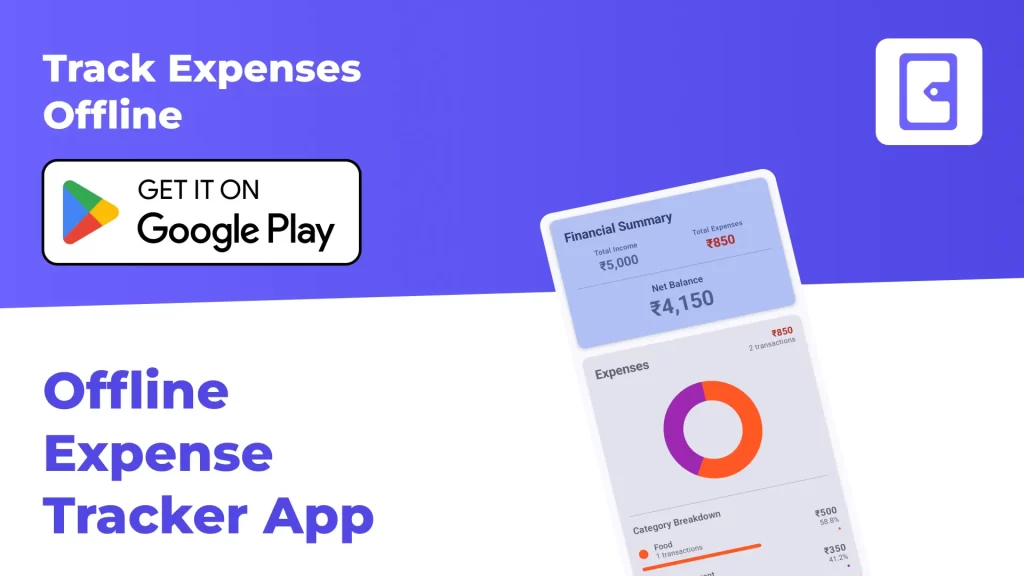
Data without context is just numbers. Expense Lite transforms your raw daily inputs into beautiful, easily digestible visual reports. Through clean pie charts and bar graphs, users can instantly see what percentage of their income is going toward housing, food, entertainment, or transportation. This visual education is critical for identifying spending leaks those small, recurring expenses that quietly drain your wealth over time.
The Behavioral Economics of Expense Tracking
To truly understand why an app like Expense Lite is a must-have, we must look at the psychology of spending. Behavioral economists have long studied a concept known as the “pain of paying.” When you hand over physical cash, your brain registers a mild form of psychological pain, which naturally regulates your spending. Digital payments bypass this neurological safeguard. Swiping a card or tapping a phone feels effortless, abstracting the reality of the money being spent.
Expense Lite artificially reintroduces a healthy dose of friction into the spending process. The simple act of manually typing in a $50 dining expense forces your brain to acknowledge the transaction. Over time, this daily interaction with the app shifts your mindset from passive consumption to active financial management.
Furthermore, Expense Lite leverages the psychological principle of the “Hawthorne Effect,” which dictates that individuals modify an aspect of their behavior in response to their awareness of being observed. When you know you have to log every purchase into Expense Lite, you become your own observer. You will naturally begin to pause before making impulse purchases, asking yourself, “Do I really want to log this in my app later?” This momentary pause is often all it takes to prevent unnecessary spending, keeping you aligned with your broader financial goals.
Integrating Expense Lite into Proven Financial Frameworks
An app is only as good as the strategy behind it. Expense Lite is designed to be flexible enough to accommodate various personal finance methodologies. To get the most out of the application, consider pairing it with one of these proven educational frameworks:
The 50/30/20 Rule
Popularized by Senator Elizabeth Warren, this budgeting rule suggests dividing your after-tax income into three categories: 50% for needs (rent, groceries, utilities), 30% for wants (dining out, hobbies, subscriptions), and 20% for savings and debt repayment. You can easily set up these overarching categories within Expense Lite. By reviewing your visual analytics at the end of the month, you can immediately see if your “wants” have crept up to 40%, allowing you to course-correct for the following month.
Zero-Based Budgeting
This method dictates that every single dollar you earn must be assigned a specific job before the month begins, leaving your unallocated balance at exactly zero. Expense Lite serves as the perfect ledger for this method. As the month progresses, you can log your expenses against your predetermined categories, ensuring that you do not overdraw from the “jobs” you assigned to your money.
The Digital Envelope System
Traditionally, the envelope system involved placing physical cash into envelopes labeled for different spending categories. When an envelope was empty, you stopped spending in that category. Expense Lite brings this concept into the 21st century. By setting budget limits for custom categories within the app, you create digital envelopes. Checking your remaining balance in the app before walking into a store provides the exact same boundary-setting benefits as looking into an empty paper envelope.
Setting Up for Long-Term Financial Success
Mastering personal finance does not happen overnight; it is a marathon of small, consistent decisions. If you are ready to take control of your financial future using Expense Lite, here is a quick roadmap for success:
First, commit to the “30-Day Logging Challenge.” For your first month using Expense Lite, do not worry about restricting your spending. Your only goal is to log every single transaction with 100% accuracy. This diagnostic phase will provide you with a baseline, revealing the honest truth about your financial habits.
Second, audit your recurring subscriptions. Use the app to tag all automatic payments. Many users are shocked to discover they are paying for streaming services, gym memberships, or software they haven’t used in months. Identifying and canceling these ghost subscriptions is the fastest way to give yourself a raise.
Finally, schedule a weekly “Money Minute.” Pick a specific time perhaps Sunday morning with your coffee to open Expense Lite, review the past week’s spending, and ensure all your categories are balanced. This weekly check-in prevents small oversights from snowballing into massive financial headaches by the end of the month.
The Path Forward
The future of personal finance is not about complex algorithms predicting your every move, nor is it about monolithic apps that attempt to control every aspect of your financial life. The future is about empowerment, awareness, and returning agency to the user. By combining a minimalist design philosophy, robust offline privacy, and intuitive behavioral nudges, Expense Lite cuts through the noise of the digital age. It provides Android users with exactly what they need to build wealth, eliminate debt, and achieve financial peace of mind. Taking control of your financial destiny starts with a single step or in this case, a single download. Start tracking mindfully, and watch your financial future transform.