Expense Lite Guide: Smart Spending Tips for Students with Limited Funds


Table of Contents
Navigating college or university life is a thrilling experience, marked by newfound independence, deep dives into your chosen field of study, and the forging of lifelong friendships. However, this period also introduces a universal and often stressful challenge: managing your own finances. For most students, funds are severely limited. Between paying for tuition, textbooks, accommodation, and the occasional night out, it is incredibly easy to watch a semester’s budget vanish in a matter of weeks. The stereotype of the “broke student” surviving on instant noodles is a reality for many, but it does not have to be your reality.
Financial literacy is rarely taught in a traditional classroom setting, yet it is one of the most critical skills you will ever need. Budgeting on a tight income doesn’t mean stripping away all the fun from your college years; rather, it means spending purposefully so you can afford the things that truly matter to you. By combining smart spending strategies with intuitive tracking tools specifically, Expense Lite you can take complete control of your financial narrative.
Here is your comprehensive guide to mastering your money, minimizing financial stress, and making every single penny count during your student years.
The Reality of Student Finances: Stopping the Invisible Leaks
Before you can fix a tight budget, you must understand exactly why it is tight. Most students do not go broke because of massive, singular purchases. Instead, they fall victim to “invisible leaks” small, frequent, and seemingly insignificant expenses that compound over time. A daily coffee from the campus café, a few extra dollars added for premium ride-sharing, multiple streaming subscriptions, and frequent late-night takeout orders can easily drain hundreds of dollars from your monthly budget without you even noticing.
The first step in any successful financial strategy is absolute awareness. You cannot manage what you do not measure. This is where the habit of daily expense tracking becomes invaluable. When you rely solely on checking your bank account balance at the end of the week, you only see the aftermath of your spending. You don’t see the behavior that led to it.
By tracking your expenses, you transition from reactive money management to proactive money management. You begin to notice patterns. You might realize that you spend more on snacks during midterms due to stress, or that your weekend entertainment budget is entirely consumed by Friday night alone. Identifying these patterns allows you to make conscious, educated adjustments, sealing up those invisible leaks before they sink your financial ship.
Adapting the 50/30/20 Rule for a Student Income
One of the most foundational concepts in personal finance is the 50/30/20 rule. Traditionally, this budgeting framework suggests allocating 50% of your income to needs, 30% to wants, and 20% to savings or debt repayment. While this is an excellent benchmark, applying it rigidly as a student can be challenging, especially when your income might consist of part-time wages, a strict allowance, or financial aid. However, the philosophy behind the rule can be adapted to perfectly fit a student lifestyle.
The 50% (or more) – Essential Needs:
For a student, essential needs include rent, utilities, groceries, transportation, and academic supplies. Because student incomes are generally lower, your needs might actually consume 60% or even 70% of your available funds. That is entirely normal. The goal here is to keep these fixed costs as low as possible. Consider living with roommates to split rent and utilities, using public transportation instead of maintaining a car, and buying groceries in bulk.
The 30% (or less) – Wants and Lifestyle:
This category covers dining out, hobbies, entertainment, and shopping. This is the area where you have the most control and where a tight budget is usually won or lost. If your needs are taking up 70% of your budget, your wants must shrink to accommodate. The trick is to maximize the value of this category. Find free campus events, host potluck dinners instead of going to restaurants, and prioritize experiences over material goods.
The 20% – Savings and Future Planning:
It might seem impossible to save money while in school, but building the habit is more important than the amount. Even if you are only putting away $10 or $20 a month, you are building an emergency fund. This fund is your safety net for unexpected expenses, like a broken laptop or an urgent medical bill, ensuring you don’t have to rely on high-interest credit cards when things go wrong.
Smart Spending Hacks Every Student Should Know
Understanding budgeting frameworks is important, but practical, day-to-day execution is where the real magic happens. Here are several actionable smart spending hacks that can dramatically extend the life of your limited funds:
1. Embrace the 24-Hour Rule for Impulse Purchases
Impulse buying is the enemy of a tight budget. Online shopping and targeted social media ads make it easier than ever to spend money with a single click. To combat this, implement the 24-hour rule: whenever you are tempted to buy a non-essential item, force yourself to wait a full 24 hours. More often than not, the emotional urge to purchase will fade, and you will realize you don’t actually need the item.
2. Maximize Your Student ID
Your student ID is basically a financial magic wand do not leave your dorm without it. Countless businesses offer discounts to students, even if they do not advertise them openly. From heavily discounted software and tech hardware to cheaper movie tickets, reduced public transit fares, and discounts at local restaurants, always ask, “Do you offer a student discount?” It takes two seconds and can save you thousands of dollars over the course of your degree.
3. Master the Art of Meal Prepping
Food is consistently one of the highest variable expenses for students. Relying on campus dining halls or local fast food is a guaranteed way to burn through your cash. Dedicate a few hours on Sunday to meal prep for the week. Cooking large batches of rice, pasta, beans, and vegetables is incredibly cheap. Portioning these out into containers means you always have a meal ready when you are rushing between classes, completely eliminating the temptation to buy expensive convenience food.
4. Never Buy New Textbooks
The cost of college textbooks is notoriously high. Avoid the campus bookstore whenever possible. Look for digital versions, rent your textbooks online, or buy used copies from upperclassmen. Once the semester is over, sell them back to recoup a significant portion of your money.
Leveraging Expense Lite to Stay on Track
All the budgeting rules and spending hacks in the world will fall flat if you do not have a reliable, frictionless system to track your progress. This is precisely where Expense Lite proves its worth. Designed by Planck Studio, Expense Lite is engineered to strip away the overwhelming complexity found in enterprise-level accounting apps, offering a streamlined, user-friendly experience perfectly tailored for students.
Frictionless Daily Logging
When an app is complicated, you simply won’t use it. Expense Lite features an intuitive interface that allows you to log an expense in seconds. Bought a coffee? Enter the amount, select the category, and you are done. This frictionless design ensures that logging expenses becomes as natural as sending a text message.
Visualizing Your Spending
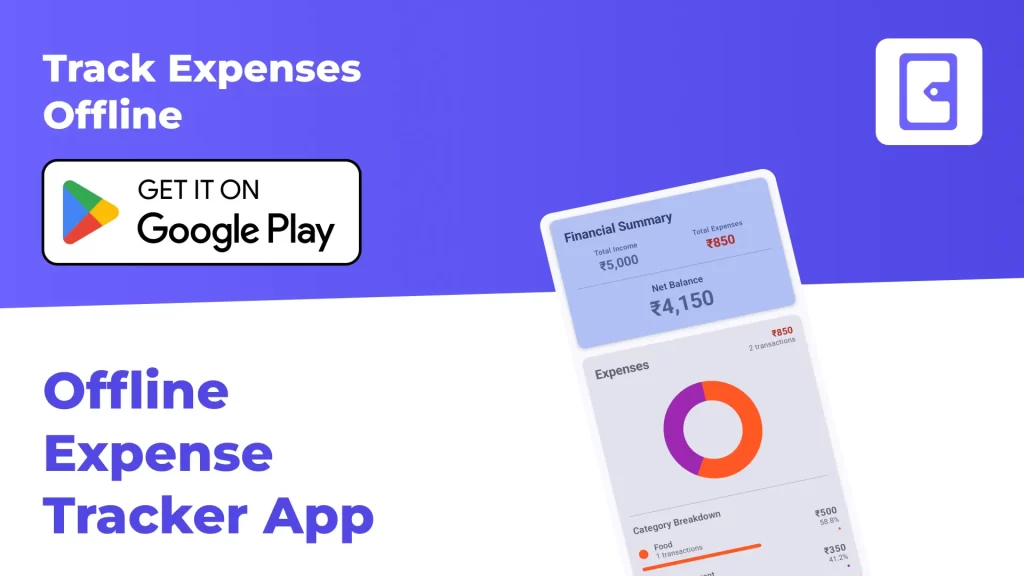
Staring at a spreadsheet of numbers can be uninspiring. Expense Lite categorizes your spending and presents it through clean, easy-to-read charts and graphs. With a quick glance, you can visually understand exactly where your money is going. Seeing a massive pie chart slice dedicated entirely to “Fast Food” is often the visual wake-up call students need to adjust their habits.
Setting Custom Budgets
Expense Lite allows you to set specific limits for custom categories. You can create a strict $50 monthly budget for “Entertainment” and track your progress against that limit in real-time. The app helps you pace yourself, ensuring that you don’t exhaust your monthly allowance in the first two weeks of the month.
Offline Accessibility
Campus Wi-Fi can be spotty, and data plans can be expensive. Expense Lite is designed to function seamlessly offline, meaning you can log your expenses anywhere, anytime, without worrying about connectivity.
Building Long-Term Financial Habits Early
The effort you put into managing your limited funds today will yield massive dividends in your future. By learning to budget, track expenses, and live below your means while you are a student, you are building a robust financial foundation.
When you eventually graduate and secure a full-time income, the discipline you cultivated using tools like Expense Lite will prevent “lifestyle creep” the tendency to spend more simply because you earn more. Furthermore, staying on top of your finances now helps you avoid the trap of high-interest consumer debt. Many students fall into credit card debt to sustain a lifestyle they cannot afford, spending years after graduation paying off the interest of their college nights out.
Managing money on a tight student budget is undeniably challenging, but it is also deeply empowering. It shifts you from a state of financial anxiety to a state of financial confidence. By understanding where your money goes, adapting budgeting rules to your lifestyle, employing smart spending hacks, and relying on streamlined tools like Expense Lite, you can master your finances. Take control of your wallet today, and you will set yourself up for a lifetime of financial success.