Expense Lite for Students: Mastering Budget Management on a Tight Budget


Table of Contents
Ah, the classic college experience: late-night study sessions, lifelong friendships, and the familiar, sinking feeling of checking your bank account balance at the end of the month. The “broke student” trope is practically a cultural milestone, but it does not have to be your reality. Transitioning into university or college life often marks the first time you are entirely responsible for your own finances. Between tuition, textbooks, rent, groceries, and attempting to maintain a semblance of a social life, your funds can evaporate faster than you might expect.
When you are living on a tight student budget whether your income comes from a part-time job, a student loan, or a monthly allowance from your parents every single transaction matters. Many students believe that budgeting is only for people with full-time salaries or massive investment portfolios. In reality, the less money you have, the more crucial it is to manage it effectively. Budgeting is not about restricting your freedom; it is about creating it. By knowing exactly where your money is going, you can spend it guilt-free on the things that actually matter to you.
This is where digital tools step in to bridge the gap between financial chaos and financial clarity. But not all tools are created equal. Let us explore how you can master your money using Expense Lite, a minimalist, highly effective budgeting tool designed to keep your finances on track without adding unnecessary stress to your already busy academic life.
The Problem with Traditional Budgeting Methods
Before diving into the solution, it is important to understand why so many students fail at budgeting. The intention is usually there. You might sit down at the beginning of the semester, open a complex spreadsheet, and meticulously plan out your expenses. But two weeks later, you buy a coffee, forget to log it, and the entire system falls apart.
Spreadsheets require you to sit at a computer, remember your transactions, and manually input data. On the other end of the spectrum are overly complicated financial apps. Many modern budgeting apps are bloated with features you simply do not need as a student. They demand connections to multiple bank accounts, bombard you with premium subscription pop-ups, and feature cluttered interfaces that make logging a simple transaction feel like a chore.
When you are rushing between lectures or grabbing a quick lunch on campus, you do not have five minutes to navigate a labyrinth of menus just to record a small purchase. If a budgeting system is not incredibly fast and incredibly simple, human nature dictates that you will eventually abandon it.
Enter Expense Lite: The Perfect Fit for Campus Life
Expense Lite was built on a simple philosophy: tracking your money should be as effortless as spending it. For a student juggling assignments, exams, and extracurriculars, an app needs to be fast, intuitive, and lightweight. Expense Lite removes the friction from financial tracking.
Here is why Expense Lite is uniquely suited for the student lifestyle:
1. Lightning-Fast Logging: When you buy a textbook or a late-night snack, you can open Expense Lite, enter the amount, select a category, and save it within seconds. The clean, distraction-free interface means you can log expenses while waiting in line for your coffee, ensuring you never forget a transaction.
2. Custom Categories for Student Life: Your expenses look very different from those of a corporate executive. Expense Lite allows you to customize your categories. You can create specific tags for “Course Materials,” “Campus Dining,” “Public Transit,” or even “Weekend Socializing.” This personalized approach ensures your budget actually reflects your real life.
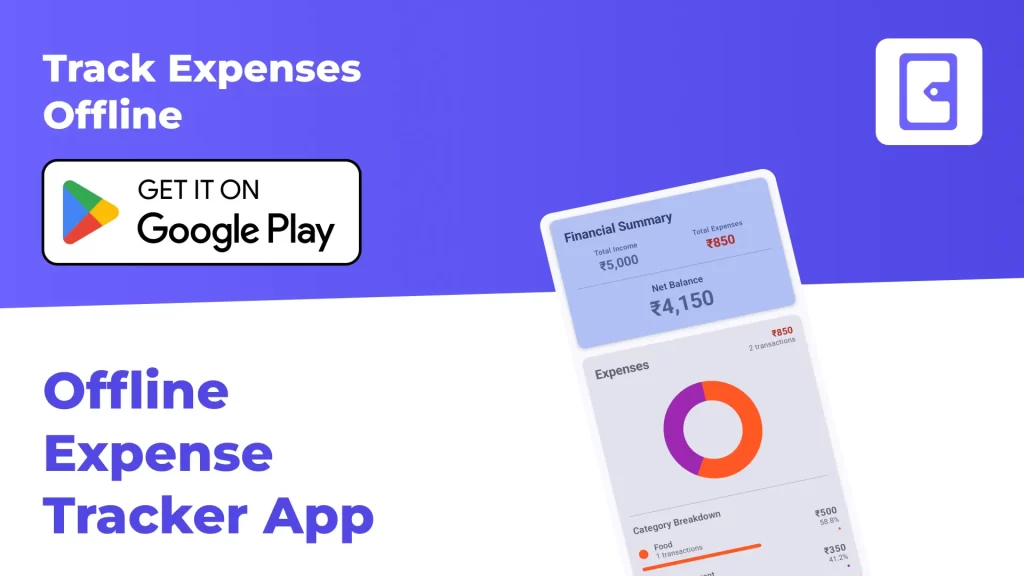
3. Visual Clarity Without the Clutter: Expense Lite translates your data into easy-to-read charts and graphs. At a single glance, you can see if you are spending too much of your monthly allowance on dining out instead of saving for your upcoming semester fees. You do not need an accounting degree to understand your financial health.
4. Privacy and Independence: As a lightweight app, Expense Lite doesn’t require invasive bank connections. You are entirely in control of your data. You simply log what you spend, keeping you highly mindful and accountable for every transaction.
Step-by-Step: Mastering Your Budget with Expense Lite
Having the right tool is only half the battle; knowing how to use it effectively is what transforms your financial life. Here is a step-by-step educational guide to setting up and mastering your student budget using Expense Lite.
Step 1: Calculate Your True Monthly Income
Before you can budget, you need to know exactly what you are working with. Calculate your total reliable income for the month. This might include your monthly allowance, income from a part-time job, or a portion of your financial aid that is meant to cover living expenses. Enter this figure into Expense Lite as your baseline. If your income fluctuates (for example, if you work hourly and your shifts change), estimate a conservative, lower-end average so you are never caught short.
Step 2: Identify and Separate Your Fixed vs. Variable Expenses
Fixed expenses are the non-negotiable bills that cost the same amount every month. For a student, this usually includes rent, utility bills, internet, and perhaps a phone plan.
Variable expenses fluctuate based on your choices. This includes groceries, eating out, entertainment, clothing, and transport. In Expense Lite, set up your fixed expenses first. Once those are accounted for, the money left over is what you have available for your variable spending.
Step 3: Apply the 50/30/20 Rule (The Student Edition)
The 50/30/20 rule is a classic financial framework that works incredibly well for students. It suggests dividing your income into three distinct buckets:
50% Needs: Rent, groceries, essential transport, utilities, and basic course materials.
30% Wants: Going to the movies, buying a coffee, dining out with friends, or purchasing a new video game.
- 20% Savings/Debt Repayment: Putting money away into an emergency fund or paying off a student loan early.
Use Expense Lite’s categorization features to group your spending into these three macro-categories. As you log your expenses throughout the month, the app’s visual dashboards will instantly show you if your “Wants” are creeping into the 40% or 50% territory, prompting you to pull back before you drain your account.
Step 4: The Daily Habit of Mindful Logging
The real magic of Expense Lite lies in the psychological shift it creates. When you commit to logging every single expense even that small pack of gum or the discounted campus bus ticket you practice financial mindfulness. You are no longer mindlessly tapping your card. The simple act of opening Expense Lite and typing in the number forces you to acknowledge the purchase. Over time, this brief moment of reflection naturally curtails impulse buying.
Smart Habits to Stretch Your Tight Budget Further
While Expense Lite is an excellent tool for tracking your money, combining it with smart lifestyle choices will supercharge your financial health. Here are a few educational tips to help you maximize the limited funds you are tracking:
Embrace the Power of Student Discounts: Never pay full price if you do not have to. Your student ID is a golden ticket to discounts on software, transportation, movie theaters, and even local restaurants. Make it a habit to ask, “Do you offer a student discount?” before paying. You will be surprised at how fast these savings add up in your Expense Lite summary at the end of the month.
Master the Art of Grocery Shopping: Dining out and ordering food delivery are the two biggest budget-killers for students. A single food delivery order can often cost the same as three days’ worth of home-cooked groceries. Use Expense Lite to track how much you spend on food delivery in a single month. Seeing the cumulative number is often enough of a shock to inspire you to start meal prepping. Learn to cook cheap, nutritious staples like rice, beans, pasta, and seasonal vegetables.
Buy and Sell Used Course Materials: College textbooks are notoriously expensive. Instead of buying brand new books from the campus bookstore, look for second-hand copies online, in student forums, or rent them digitally. At the end of the semester, sell them to recoup your costs. You can log this as a satisfying “Income” entry in Expense Lite!
Audit Your Subscriptions: Do you really need three different streaming services? Are you actually using that premium study app you subscribed to in your first week? Subscription fatigue is real, and small monthly charges bleed your budget dry without you noticing. Go through your recurring expenses in Expense Lite and brutally cut anything that is not adding significant value to your life.
Building Wealth Habits for the Future
It is easy to think that you will start taking your finances seriously once you graduate and land a “real job.” But personal finance is a behavioral game, not a mathematical one. If you cannot manage ₹5,000 (or $100) responsibly as a student, you will struggle to manage ₹50,000 (or $1,000) as a professional.
By using Expense Lite during your college years, you are not just surviving a tight budget; you are building foundational habits that will last a lifetime. You are learning the discipline of living below your means, the importance of tracking cash flow, and the value of deferred gratification. These are the exact same skills required to build long-term wealth, invest in property, or start a business later in life.
Every time you log an expense, review your monthly chart, and adjust your spending behavior, you are actively investing in your own financial literacy.
College is a time of incredible growth, education, and preparation for the real world. Do not let financial stress overshadow this vital chapter of your life. By adopting a straightforward, no-nonsense tool like Expense Lite, you can take immediate control of your tight budget. You will know exactly where your money is going, make informed decisions about your spending, and perhaps even find room to save for that post-graduation trip you have been dreaming about. Take a few minutes today to set up your budget, commit to the daily habit of tracking, and watch as financial anxiety is replaced by financial confidence.