How Students Can Use Expense Lite to Save Money Every Semester


Table of Contents
College life is synonymous with newfound freedom. You get to choose your classes, set your schedule, and decide how you spend your free time. However, this independence brings along one of the most daunting responsibilities a young adult can face: managing your own money. For many students, the reality of living on a tight budget hits hard. You might start the semester feeling financially secure, only to find yourself eating instant noodles and counting pennies by the time final exams roll around.
The “broke college student” is a common stereotype, but it does not have to be your reality. The key to surviving and thriving financially during your college years isn’t necessarily having a massive income it is having total visibility over where your money is going. This is where Expense Lite comes in. Designed with simplicity and efficiency in mind, Expense Lite is the perfect financial companion for students who need to stretch their rupees, dollars, or euros as far as possible.
Here is a comprehensive guide on how you can use Expense Lite to master your finances, plug the leaks in your budget, and actually save money every single semester.
1. Beating the “Lump-Sum Illusion” with a Baseline Budget
One of the biggest financial traps students fall into is the “lump-sum illusion.” At the beginning of the semester, you might receive a student loan payout, a grant, or a lump sum from a summer job. When you look at your bank account in September or January, you feel wealthy. This false sense of security often leads to rampant overspending in the first few weeks on expensive textbooks, dorm decorations, and takeout food. By mid-semester, panic sets in as the balance dwindles at an alarming rate.
To combat this, your first step is to establish a strict baseline budget, and Expense Lite makes this incredibly intuitive. Before the semester even begins, sit down and calculate your total available funds for the next four to five months. Divide that total by the number of weeks in the semester to find your weekly allowance.
Once you have this number, open Expense Lite. Begin by logging your absolute necessities your fixed expenses. These are the non-negotiables like rent, tuition fees, utilities, and mandatory meal plans. By inputting these right away, the app helps you visualize exactly how much of your initial lump sum is already spoken for. What remains is your discretionary income. Seeing this true, much smaller number on your screen completely shatters the lump-sum illusion and sets realistic expectations for your daily spending habits from day one.
2. Categorizing Your Variable College Costs
Once your fixed expenses are locked in, the real work begins: managing your variable expenses. These are the fluctuating costs that can easily spiral out of control if left unmonitored. College life is full of unpredictable spending, from late-night study snacks and impromptu weekend trips to rideshare fares and subscription renewals.
Expense Lite allows you to create customizable categories tailored specifically to a student’s lifestyle. Instead of generic labels, you can create highly specific tags in the app. Consider setting up categories such as:
Academics: Textbooks, software licenses, printing credits, and stationary.
Groceries: Your weekly supermarket runs.
Dining Out/Takeout: The coffee shop visits between lectures and late-night pizza runs.
Transportation: Bus passes, rideshares, or gas money.
- Social & Entertainment: Movie nights, concerts, or weekend outings with roommates.
By categorizing every expense, you give every dollar a specific job. When you buy a coffee, you log it under “Dining Out.” When you buy a notebook, it goes under “Academics.” This granular level of categorization within Expense Lite is crucial because it highlights exactly which areas of your life are draining your wallet. You might be surprised to find that you are spending more on rideshares to get to class than on your weekly groceries.
3. Neutralizing “Money Leaks” Through Frictionless Tracking
Have you ever looked at your bank account and wondered, “Where did my money go?” This phenomenon is usually caused by “money leaks” small, seemingly insignificant purchases that add up to a massive sum over time. A three-dollar energy drink here, a five-dollar streaming subscription there, and a two-dollar vending machine snack can easily drain hundreds of dollars from your semester budget without you even noticing.
The only way to plug these leaks is through daily, diligent expense tracking. Historically, students have avoided tracking their expenses because maintaining a complex spreadsheet is tedious, especially when you are already swamped with assignments and exams.
Expense Lite solves this problem by offering a frictionless, minimalist interface. Because the app is lightweight and designed for speed, logging an expense takes less than five seconds. You don’t need to navigate through clunky menus you simply open the app, enter the amount, tap the category, and close it.
To make this a habit, practice the “point of sale” rule: the moment you hand over your card or cash, immediately log the transaction in Expense Lite before you even put your phone back in your pocket. This builds a powerful psychological barrier. When you are forced to actively acknowledge every single purchase, you naturally become more mindful. You start asking yourself, “Do I really need this purchase, or am I just buying it out of habit?” Over the course of a semester, this heightened awareness alone can save you a significant amount of money.
4. Leveraging Visual Data to Survive the Mid-Semester Slump
Around the middle of the semester, midterms arrive, stress levels skyrocket, and financial discipline usually goes out the window. Students often rely heavily on convenience foods, extra caffeine, and stress-relief shopping. This is the exact moment when most student budgets completely collapse.
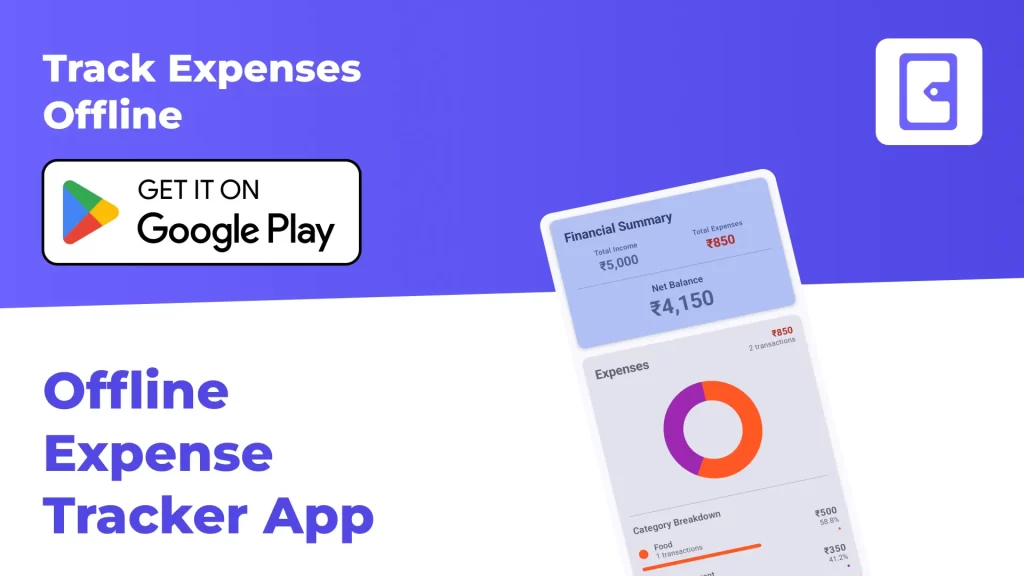
To survive the mid-semester slump, you need to rely on data rather than willpower. Expense Lite features built-in, easy-to-read analytics and visual charts that act as your financial reality check. At the end of every week, take five minutes to review your spending charts within the app.
The visual representation of your money is highly educational. A pie chart might clearly show that a massive 40% of your weekly budget was devoured by “Dining Out/Takeout” during midterm week. Instead of feeling guilty, use this data strategically. If you see that your takeout spending is trending dangerously high, you can actively pivot. You might decide to meal-prep on Sunday to prevent ordering out on Tuesday, or you might switch from buying lattes at the campus café to brewing your own coffee in your dorm.
Because Expense Lite provides real-time analytics, you can catch bad spending trends in week six and correct them, rather than waiting until week twelve when your bank account is already overdrawn.
5. Shifting from Surviving to Saving
When you are living on a tight college budget, the idea of actually saving money might sound like a joke. Most students are just trying to survive until the next semester. However, by consistently using Expense Lite to eliminate money leaks and optimize your variable spending, you will likely find yourself with a surplus at the end of the month.
This surplus is your ticket to financial security. Instead of letting that extra money sit idle (or accidentally spending it), you can use Expense Lite to track your savings goals. You can create a dedicated “Savings” category in the app and “pay yourself first.”
Whether you are saving up for a reliable laptop, a spring break trip with friends, or simply trying to build a small emergency fund to cover unexpected expenses like a medical bill or a phone repair, tracking your progress keeps you motivated. Watching your savings category grow week by week in the app is incredibly rewarding and reinforces all the good financial habits you have been building.
Furthermore, the budgeting skills you develop now will pay massive dividends after graduation. The transition from college to the professional world is notoriously difficult, but if you already know how to allocate funds, track daily spending, and analyze financial data using a tool like Expense Lite, you will be lightyears ahead of your peers.
Managing money on a student budget will never be entirely free of stress, but it doesn’t have to be a blind guessing game. By acknowledging the reality of your income, utilizing custom categories, tracking every small purchase, and letting visual data guide your decisions, you take absolute control of your financial destiny. Make the commitment this semester to ditch the financial anxiety. Let Expense Lite do the heavy lifting of tracking your numbers, so you can get back to focusing on what really matters: your education, your experiences, and your future.